Themes
Moroccan Cuisine Explained: Tagine, Couscous, Pastilla and Other Delights
Moroccan cuisine is one of the richest in the world. Fragrant tagines, generous couscous, delicate pastilla, legendary mechoui: discover all the secrets of Moroccan gastronomy and the best ways to experience it in Marrakech.
Moroccan cuisine is regularly ranked among the best in the world, and that is no accident. It draws its richness from centuries of cultural exchange — Berber, Arab, Andalusian, African and Ottoman influences — to offer a palette of flavours of remarkable depth. More than just a cuisine, it is a culture, a ritual, a way of life. For travellers discovering Marrakech, understanding this gastronomy opens a direct door to the soul of the country. Here is the complete guide to fully exploring Moroccan cuisine.
The tagine, the ultimate icon
The tagine is probably the most emblematic dish of Moroccan cuisine. The word refers both to the dish (made of terracotta with a conical lid) and to the preparation that simmers in it for hours. The conical lid allows the steam to fall back and slowly baste the meat, creating that inimitable tenderness. The varieties are endless: chicken tagine with preserved lemons and olives, lamb tagine with prunes and almonds, beef tagine with vegetables, fish tagine with mild spices, kefta tagine with eggs. Every Moroccan family has its own recipes passed down from mother to daughter.
Couscous, the Friday ritual
In Morocco, couscous is traditionally the Friday dish, the holy day when families gather. Its preparation is a true art — the semolina is rolled by hand and then steamed several times to achieve that perfect, light and airy texture. Moroccan couscous is generally served with seven vegetables (carrots, courgettes, turnips, pumpkin, cabbage, onions, chickpeas) and lamb or beef. The secret of a great couscous lies in the quality of the broth — slow-cooked, fragrant and balanced.
Pastilla, an invitation to sweet and savoury flavours
Pastilla is probably the most surprising dish for Western palates. This flaky pie combines pigeon or chicken, almonds, eggs and sugar in a crispy brick pastry dusted with cinnamon and icing sugar. The sweet-savoury combination is disconcerting at first, then fascinates for good. Pastilla is traditionally served as a starter on special occasions. A modern seafood version also exists, more accessible to the uninitiated.
Méchoui, Berber generosity
Méchoui refers to a whole lamb slowly spit-roasted for several hours until the meat falls off the bone by itself. It is a festive dish, generally served at weddings or big celebrations. The meat is exceptionally tender, simply seasoned with salt and cumin. It is a dish to experience at least once during your stay, especially in the traditional restaurants that make it a speciality.
Tangia, the speciality of Marrakech
Tangia is THE emblematic dish of Marrakech, an absolute must-try during your stay. This preparation of lamb, preserved lemon, garlic, saffron and spices is traditionally cooked in a terracotta jar buried for hours in the embers of the hammams. The result is incomparably tender and fragrant. Originally a typically male dish, prepared by men for men during outings with friends, tangia is today enjoyed by everyone.
Spices, the soul of Moroccan flavour
No cuisine uses spices as subtly as Moroccan cuisine. Ras el-hanout, a complex blend of 27 to 30 different spices (cardamom, cumin, cloves, cinnamon, ginger, saffron, etc.), is the secret of many dishes. Saffron, cumin, paprika, cinnamon, ginger, coriander and cumin are the pillars of this gastronomy. Mastering the quantities, knowing the combinations, patience in cooking — it is all about balance and passing on knowledge.
Mint tea, the sacred ritual
Mint tea is not just a drink in Morocco — it is a social ritual, a sign of hospitality, a shared moment. Its preparation follows a precise protocol: Chinese green tea (usually Gunpowder), plenty of fresh mint, generous sugar. It is traditionally served by pouring the tea from high up to create a characteristic foam. Refusing mint tea in Morocco is almost an affront — tradition says you should accept at least three glasses.
Learning to cook Moroccan food in Marrakech
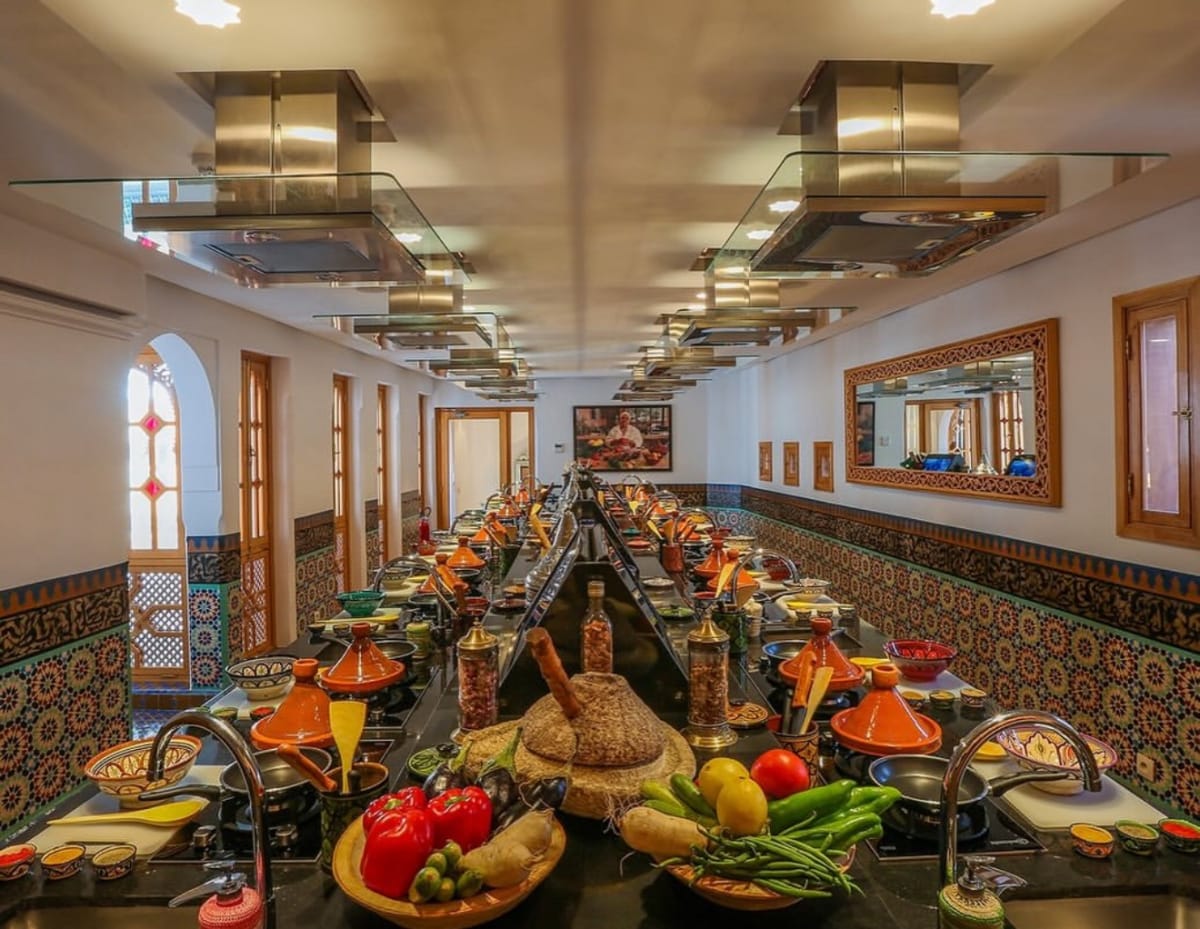
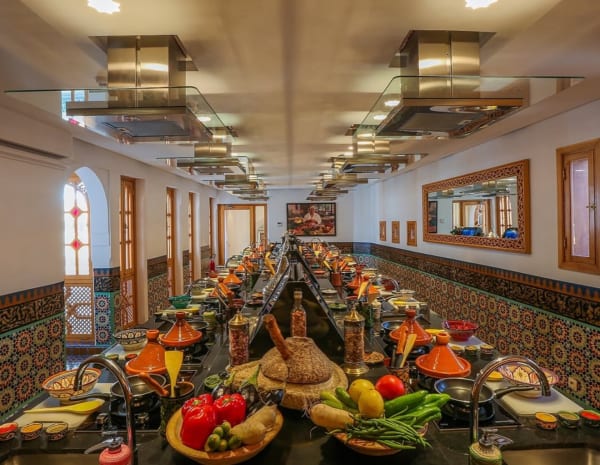
For a real immersion in Moroccan cuisine, nothing beats a cooking class. Traditional Moroccan cooking workshops generally take you to the market to choose the produce before coming back to cook with a chef. You learn to prepare a tagine, a Moroccan salad, sometimes a pastilla. You leave with the recipes and a new understanding of this gastronomy. It is an activity particularly popular with couples and families.
For an even more authentic experience
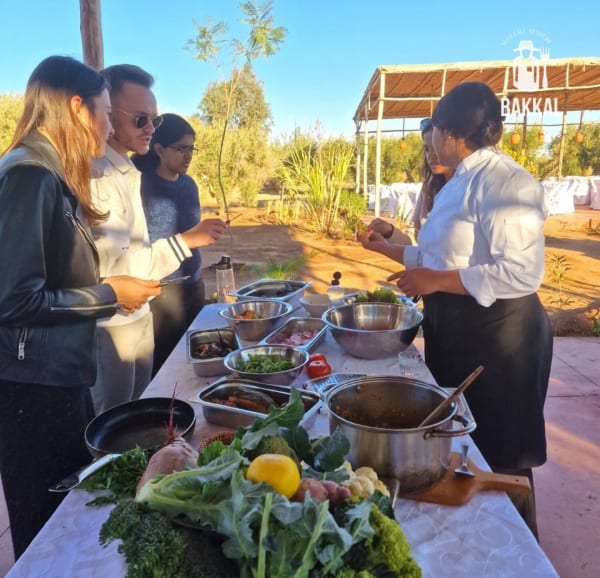
The Outdoor Cooking Class offers a particularly interesting variation: a cooking class in a natural setting outside the city. The immersion is total, the atmosphere relaxed, the experience unforgettable. It is one of the most enriching activities for those who really want to understand Moroccan cuisine in its cultural context.
Where to taste the best Moroccan cuisine
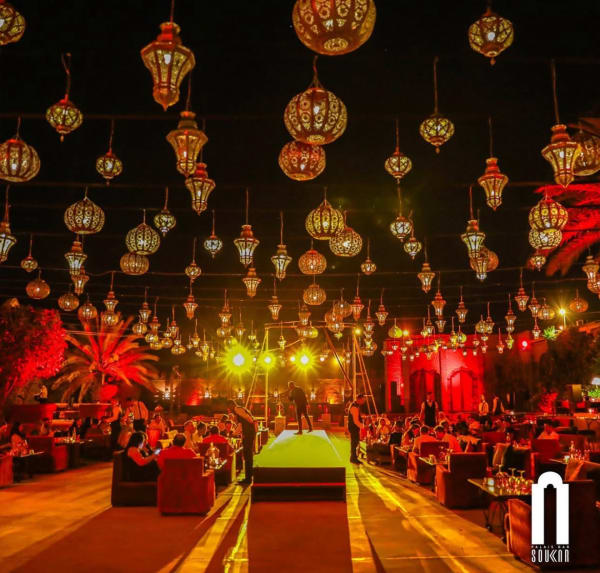
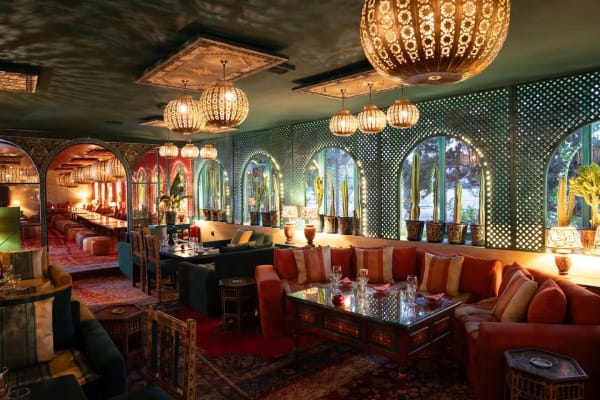
Several addresses excel in traditional Moroccan cuisine. Le Palais Dar Soukkar offers a grand experience in an absolutely sumptuous setting, perfect for a memorable evening. Folk celebrates popular Moroccan cuisine in all its regional diversity, with a menu that travels across the country. All these addresses are Marrakech Best Place partners and can be booked for free on our website.
Tips for a true gastronomic immersion
Start your meals with Moroccan salads — often served as an assortment, they offer a true explosion of flavours and prepare the palate for what comes next. Don't hesitate to eat with your fingers as tradition dictates — bread replaces cutlery. Try several specialities rather than always ordering the same thing. And end every meal with a mint tea.
Venues featured in this article
Ready to discover Marrakech?
Book in 3 clicks