Moroccan cooking workshops
About
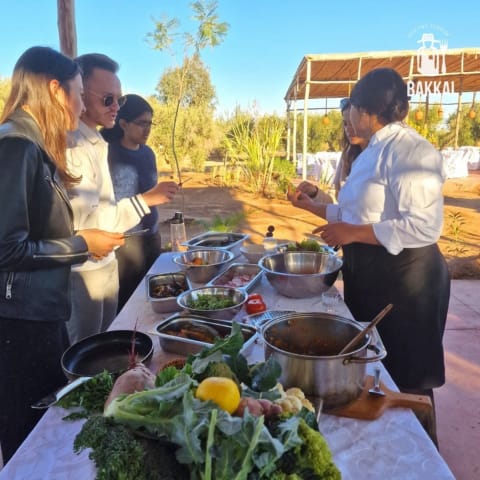
Cooking workshops in a prestigious venue in Marrakech: La Maison Arabe. Rates per class and per person: 600 dhs per person for a maximum of 26 people. The price includes the cooking workshop, lunch and alcoholic drinks. Two cooking workshops are offered each day: one at 10 am and one at 3 pm. For a private cooking class, the price is: 5000 dhs for up to 6 people 8000 dhs for up to 13 people Choice of half-day classes: Briouates class: Assortment of Moroccan briouates (turnovers): cheese, minced chicken, vegetables and seafood Pastilla class (choice of): - Chicken with almonds - Seafood - Vegetables - Tagine class (choice of): - Chicken tagine with lemon and olives - Chicken M'derbel tagine (tomatoes simmered with cinnamon and sesame seeds) - Chicken tagine with almonds and hard-boiled eggs - Lamb tagine with dates and almonds - Lamb tagine with figs and walnuts - Beef or lamb Makfoul tagine (steamed tomatoes with baby onions) - Lamb tagine with prunes and apricots Couscous class (choice of): - Chicken or lamb with caramelised onions - Chicken or lamb with seven vegetables A cooking class usually begins with a comprehensive introduction highlighting the importance of cooking in Moroccan society and reviewing the variety of recipes created by the dadas (traditional cooks) over the centuries for special occasions such as weddings, baptisms and circumcisions. We then go through the most traditional recipes such as pastilla, couscous and the wide variety of tagines (stews usually made with lamb or chicken), while reviewing some of the pillars of Moroccan cuisine: Spices: The main spices used in Moroccan cuisine are ginger, saffron, cumin, ras el-hanout (a blend of up to 35 different spices), as well as salt and pepper. Olive oil, abundant in Morocco, is also an essential ingredient in local cuisine, as is ghi (a type of aged butter). Herbs: Most Moroccan recipes use parsley and coriander. Other essential herbs, such as thyme, oregano, bay leaf, rosemary and basil, are used depending on the recipe. Cooking method: Traditionally, Moroccan households used charcoal and clay pots to prepare tagines or couscous. Modern Moroccan households of course use the same gas or electric cookers as European or American homes. La Maison Arabe's cooking workshops are taught with modern equipment, so that participants can easily prepare the dishes they have learned once back in their own country. Cooking techniques: A typical tagine recipe consists of searing the meat, softening the onions, bringing to the boil and letting it simmer gently. This produces a thick, reduced, purée-like sauce. Finally, before the practical part of the cooking class begins, participants familiarise themselves with the recipe of the day, whether it is a chicken tagine with olives and preserved lemons, couscous or pastilla, and go over the different vegetables and ingredients that will be used. La Maison Arabe's cooking classes are built around traditional recipes that are easy to make. Each participant has their own workstation and equipment and follows the preparation of the dish of the day step by step. In a typical workshop, you learn to prepare a main course, as well as a Moroccan starter or salad (for example, roasted aubergines or green peppers with tomatoes). Once the class is over, it's time to taste. Participants enjoy the meal they have prepared in the shade of an olive or fig tree, by the hotel pool. The chef and the translator make sure they have enjoyed themselves and learned a great deal about Moroccan cuisine and culture.
100% free booking · Pay on site